


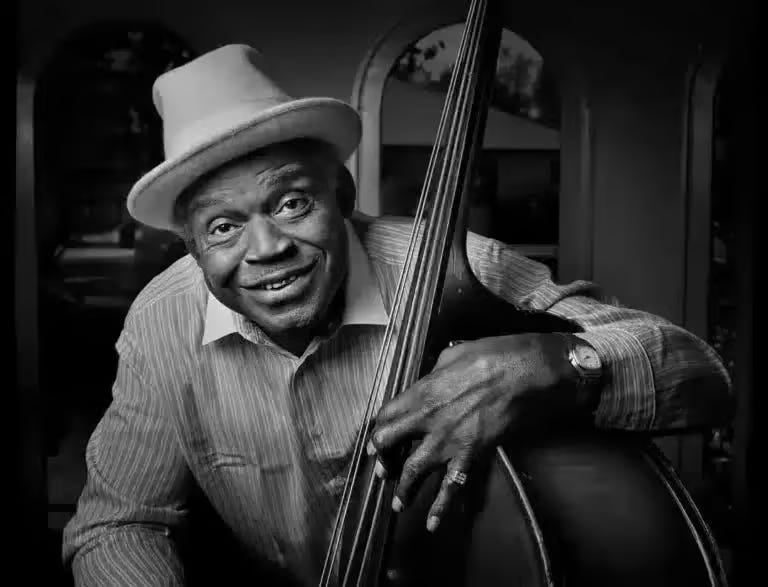
Was Willie Dixon is the most influential blues or rock musician ever? This thought kept occurring to me as I read through online celebration of his birthday earlier this month. (He was born in Vicksburg, Mississippi on July 1, 1915).
Dixon was a bass player who played on countless classic Chess sides by Muddy Waters, Howlin’ Wolf and many others. But his importance was a talent scout, producer and particularly composer. He wrote dozens of blues classics, that defined the careers and catalogs of Muddy (“Hoochie Coochie Man,”) Wolf (“Spoonful”), Little Walter (“My Babe”), Koko Taylor (“Wang Dang Doodle”), Otis Rush (“I Can’t Quit You Baby”) and so many others. And most of the songs I chose here could be replaced by several others.
Dixon in many ways defined the Chess sound and in doing so, he defined the sound of rock and roll. His songs were covered by a who’s who of British and American artists, from the Rolling Stones (“Little Red Rooster” and many others) and Cream (“Spoonful”) to The Doors (“Back Door Man”) and Allman Brothers (“Hoochie Coochie Man,” “The Same Thing”). Some artists, notably Led Zeppelin just took songwriting credits for themselves. (They eventually did pay up and add Dixon as a writer to “Whole Lotta Love” in 1999. Story here.)
Of course, Dixon himself borrowed liberally from old folk songs. “Spoonful,” for instance, is loosely based on "A Spoonful Blues,"a song recorded in 1929 by Charley Patton, who may well have heard it from someone else.
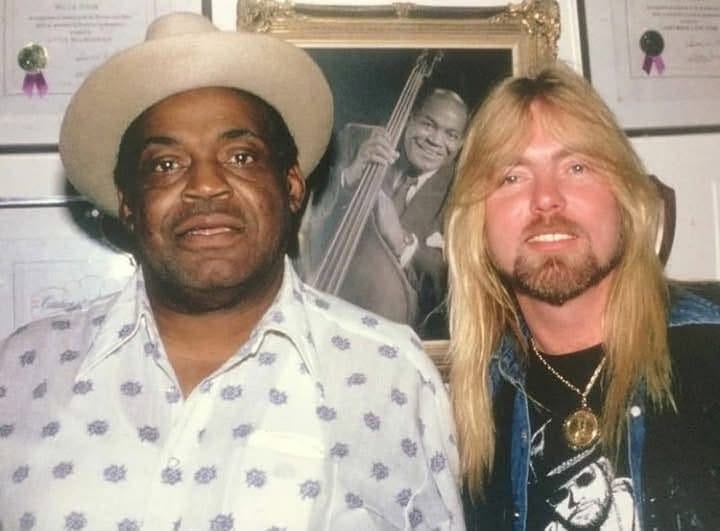
Below are a few of his greatest songs, and the thoughts of Bob Weir, who wrote “Eternity” with Willie.
Bob Weir on “Eternity” (co-written with Willie Dixon) Never recorded on a studio album. Played by GD and appeared on So Many Roads: 1965-1995
“I went to see Willie Dixon when he played a club near my house and he called me up to jam and, of course I had a great time. Then I asked him if he might like to work on a song. We got together in a studio in West Hollywood and kicked some ideas around and agreed to regroup the next day in my hotel room. I had the song’s signature descending riff, which I wrote based on him telling me, ‘Don’t be going to any of them jazz chords.’ He wanted to step slightly out of his bag, which is why he wanted to work with me, but he didn’t want to step too far, so I came up with this Louis Jordan jump blues style pattern. He slowed it down and we started developing it, and he came up with a chorus and got me singing it with him singing the harmony part. Then we went to separate corners to hammer out our parts and he was jotting down words really fast.
“He handed me this piece of paper, filled with simplistic, almost child-like writing and I was really disappointed. He said, ‘Sing it out loud’ so I started and after two verses and choruses of thinking it rather lame, the eloquent simplicity of the words hit me and my jaw just dropped. I think he read everything I was thinking because he just started laughing and said, ‘That’s the wisdom of the blues.’ That was a big moment for this boy because as far as I’m concerned Willie Dixon was a living saint. I thought that before I met him, and I had every single suspicion confirmed from knowing him for a few years.”
“Spoonful”
Otis Rush doing “I Can’t Quit You Baby” is one of the most powerful blues recordings ever, IMHO.
One of Albert Collins final performances was playing “The Same Thing” with the Allman Brothers Band.
“I Just Want to Make Love to You” by Muddy Waters
“Back Door Man”
“I Ain’t Superstitious” by Howlin’ Wolf
“My Babe” by Little Walter
“Wang Dang Doodle” by Koko Taylor
Brothers and Sisters: the Allman Brothers Band and The Album That Defined The 70s was my third straight book to debut in the New York Times Non-Fiction Hardcover Bestsellers List, following Texas Flood: The Inside Story of Stevie Ray Vaughan and One Way Out: The Inside History of the Allman Brothers Band. My first book was Big in China: My Unlikely Adventures Raising a Family, Playing the Blues and Becoming a Star in Beijing, about my experiences raising a family in Beijing and touring China with a popular original blues band. It was optioned for a movie by Ivan Reitman’s Montecito Productions. I am also a guitarist and singer who fronts two bands, Big in China and Friends of the Brothers, the premier celebration of the Allman Brothers Band.
Absolutely agree. I would also add that some of his songwriting credits are inflated due to how the Chess Brothers handled that part with artists. Several artists have been financially impacted. That is disappointing for sure and impacted many financially. Regardless, he is a pillar and deserves all his accolades and recognition alongside the other greats like Muddy, Buddy, Jimmy Reed and on and on. These guys are my heroes and changed the world and made music better!!! Long live the blues
Alan: 100% agree! Willie Dixon is truly one of the giants of 20th century American music; he's on my Mount Rushmore along with Ray Charles, Louis Armstrong, and say Coltrane and Miles.
There was a phase I went through in the '90s where if I found an album Willie was on, I bought it. The classic Chuck Berry, Little Walter, Bo Diddley, Muddy Waters, Howlin' Wolf, Sonny Boy Williamson, Buddy Guy, Magic Sam, Otis Rush, Ike Turner... It's insane.
I also love his work with Memphis Slim. Willie's Blues, which they recorded during a 2-hour session at Rudy Van Gelder's studio during a 1959 flight layover, is one of my favorite records ever; I've given it as a gift at least 5 times.